
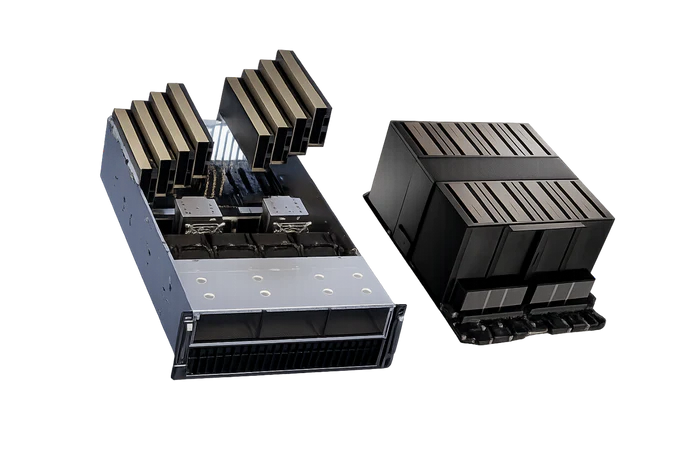
Modern enterprises are entering a new era of digital transformation powered by artificial intelligence, real-time analytics, edge computing, and high-performance workloads. At the center of this evolution are AI servers, which are rapidly becoming the backbone of enterprise infrastructure. Organizations across industries now require server environments capable of handling massive datasets, accelerated computing, virtualization, and hybrid cloud operations without compromising efficiency or scalability.
As demand for AI-driven applications grows, the future of server technology is shifting toward smarter architectures, faster interconnects, advanced memory technologies, and energy-efficient infrastructure. From next-generation CPUs and PCIe 6.0 connectivity to DDR6 memory and advanced NVMe storage, the server industry is undergoing a significant transformation designed to support tomorrow’s workloads.
This article explores the technologies shaping the future of AI servers and how enterprises can prepare for the next wave of data center innovation.
The Rising Importance of AI Servers
Artificial intelligence has moved beyond experimental projects and become a core business requirement. Enterprises are deploying AI for predictive analytics, automation, cybersecurity, healthcare diagnostics, financial modeling, and customer experience optimization. These workloads demand computing infrastructure that can process enormous amounts of data with minimal latency.
Traditional server environments were designed primarily for general-purpose computing. AI servers, however, are optimized specifically for parallel processing, GPU acceleration, and high-bandwidth memory access. They are engineered to support machine learning training, inference workloads, and high-performance computing applications at scale.
The rise of generative AI models and large language models has further accelerated demand for advanced server infrastructure. Organizations now require platforms capable of supporting intensive GPU operations while maintaining energy efficiency and scalability.
This shift is driving innovation across every component of modern server architecture.
Next-Generation CPU Architectures and AI-Optimized Processing
One of the most significant developments in server technology is the rapid evolution of CPU architectures. Both Intel and AMD are investing heavily in next-generation chipsets that prioritize performance per watt, core density, and AI acceleration.
Intel’s Evolving Server Ecosystem
Intel continues to enhance its Xeon server processors with improved AI acceleration capabilities, advanced security features, and increased scalability. Modern Xeon architectures integrate dedicated AI instructions that improve machine learning inference and analytics performance without relying solely on external accelerators.
Future Intel server platforms are expected to focus on:
- Greater core counts for parallel workloads
- Enhanced integrated AI acceleration
- Improved memory bandwidth
- Better energy efficiency
- Optimized support for PCIe 6.0 connectivity
These developments are particularly important for enterprises deploying AI servers in data-intensive environments.
AMD EPYC and High-Core Density Innovation
AMD has become a major force in the server market through its EPYC processor lineup. EPYC processors offer high core density, strong multithreaded performance, and exceptional energy efficiency, making them highly attractive for virtualization, AI, and cloud computing.
AMD’s chiplet-based architecture allows greater flexibility and scalability while improving thermal efficiency. Future EPYC generations are expected to continue increasing core counts and memory bandwidth while optimizing AI processing capabilities.
The competition between Intel and AMD is accelerating innovation, ultimately benefiting organizations seeking more capable AI servers and high-performance computing servers.
Heterogeneous Computing Becomes Standard
The future of server technology is increasingly centered around heterogeneous computing. Instead of relying solely on CPUs, next-generation servers combine CPUs, GPUs, FPGAs, and specialized AI accelerators into unified platforms.
This architecture allows workloads to be distributed to the most efficient processing unit. For example:
- CPUs manage orchestration and general computing
- GPUs accelerate AI model training
- FPGAs optimize specific workloads
- AI accelerators improve inference performance
Heterogeneous computing significantly improves performance while reducing energy consumption, making it essential for future AI servers.
PCIe 6.0 and the Future of Server Connectivity
Connectivity is another critical area undergoing transformation. As AI workloads become larger and more complex, servers require significantly faster communication between CPUs, GPUs, storage devices, and networking hardware.
PCIe 6.0 is emerging as a major advancement in server interconnect technology.
What PCIe 6.0 Brings to AI Servers
PCIe 6.0 doubles the bandwidth of PCIe 5.0 while reducing latency and improving signal efficiency. This increase in throughput is essential for AI servers handling massive datasets and GPU-intensive operations.
Key advantages of PCIe 6.0 include:
- Faster GPU communication
- Improved storage throughput
- Reduced bottlenecks
- Better networking performance
- Enhanced scalability for AI and HPC environments
The increased bandwidth enables servers to transfer data more efficiently between accelerators, processors, and storage devices.
Impact on GPUs and AI Workloads
AI training models often require multiple GPUs operating simultaneously. PCIe 6.0 improves communication between these GPUs, reducing latency and enabling faster training times.
This advancement is particularly important for:
- Deep learning applications
- Real-time analytics
- Scientific simulations
- Autonomous systems
- Large-scale inference engines
As AI models continue growing in size, PCIe 6.0 servers will become essential for maintaining performance and scalability.
Enabling Next-Generation Networking
Modern data center infrastructure depends heavily on high-speed networking. PCIe 6.0 enhances support for advanced networking technologies such as 400GbE and future high-bandwidth fabrics.
This capability enables faster communication between distributed AI clusters, edge nodes, and cloud environments. Enterprises deploying AI servers across hybrid infrastructures will benefit from improved data transfer efficiency and reduced latency.
DDR5 to DDR6: The Evolution of Server Memory
Memory technology plays a central role in server performance, especially for AI and high-performance computing servers. The transition from DDR5 to DDR6 represents another major milestone in next-generation server technology.
The Benefits of DDR5 Memory
DDR5 memory introduced significant improvements over DDR4, including:
- Higher bandwidth
- Increased memory density
- Lower power consumption
- Better multitasking performance
- Improved reliability
DDR5 has already become a key component of modern AI servers because AI workloads require rapid access to large datasets.
What DDR6 Will Deliver
DDR6 memory is expected to further expand memory bandwidth while improving energy efficiency and scalability. Future AI servers will rely heavily on DDR6 to support increasingly complex machine learning models and real-time analytics applications.
Projected DDR6 benefits include:
- Dramatically higher transfer speeds
- Reduced latency
- Greater memory capacity
- Enhanced energy efficiency
- Better support for AI and virtualization
These improvements will help organizations process larger datasets more efficiently while supporting denser virtualized environments.
Why Memory Bandwidth Matters for AI
AI training workloads require constant movement of large volumes of data between processors and memory. Memory bottlenecks can significantly reduce performance, even in GPU-accelerated environments.
DDR6 will help eliminate these bottlenecks by delivering the bandwidth necessary for modern AI servers and next-generation data center infrastructure.
The Future of Storage: NVMe and Advanced SSD Technologies
Storage technology is evolving rapidly to meet the demands of AI, edge computing, and real-time analytics. Traditional storage architectures are no longer sufficient for modern enterprise workloads.
NVMe as the New Standard
NVMe storage has transformed server performance by reducing latency and dramatically increasing throughput compared to legacy SATA and SAS storage systems.
Modern AI servers rely on NVMe SSDs for:
- Faster data ingestion
- Rapid model loading
- Real-time analytics
- High-speed caching
- Accelerated database operations
As enterprises generate more data, NVMe storage becomes increasingly critical.
Emerging SSD Technologies
Future SSD technologies are expected to deliver:
- Higher endurance
- Faster write speeds
- Lower latency
- Greater storage density
- Improved thermal management
These advancements are particularly important for AI training environments where datasets are continuously read and written at high speed.
Computational Storage and AI Pipelines
An emerging trend in server infrastructure is computational storage, where processing capabilities are integrated directly into storage devices. This approach reduces data movement between storage and CPUs, improving efficiency and lowering latency.
For AI servers, computational storage can accelerate:
- Data preprocessing
- Real-time filtering
- Video analytics
- Machine learning pipelines
As workloads become more data-intensive, computational storage may become a foundational element of next-generation server technology.
AI and High-Performance Computing Infrastructure
The rapid growth of AI applications is transforming enterprise infrastructure planning. Organizations are now prioritizing AI-ready environments that can support both current and future workloads.
GPU Acceleration Becomes Essential
GPUs have become central to modern AI servers because they excel at parallel processing. AI training and inference workloads benefit significantly from GPU acceleration, particularly when handling deep learning models.
Future data center infrastructure will increasingly incorporate:
- Multi-GPU server architectures
- AI-specific accelerators
- High-speed GPU interconnects
- Unified memory architectures
GPU-powered AI servers are now essential for industries such as healthcare, finance, manufacturing, and autonomous systems.
The Expansion of Edge Computing
Edge computing is another major driver of next-generation server technology. Instead of processing data exclusively in centralized data centers, organizations are deploying AI servers closer to end users and devices.
Edge AI servers support applications such as:
- Smart manufacturing
- Autonomous vehicles
- Retail analytics
- IoT processing
- Real-time video analysis
This decentralized model reduces latency and improves responsiveness while minimizing bandwidth usage.
Hybrid Cloud and AI Infrastructure
Hybrid cloud environments are becoming the preferred architecture for many enterprises. Organizations require infrastructure that can seamlessly integrate on-premises servers, public cloud services, and edge deployments.
Modern AI servers are designed with hybrid cloud compatibility in mind, enabling organizations to:
- Scale workloads dynamically
- Optimize costs
- Improve disaster recovery
- Enhance data sovereignty
- Support distributed AI applications
Companies seeking reliable enterprise infrastructure solutions often explore platforms that support scalable AI and high-performance computing environments. Businesses looking for modern server deployments can review enterprise-grade options through Saitech’s server solutions to better understand current infrastructure capabilities aligned with emerging technologies.
Sustainability and Energy Efficiency in Modern Data Centers
As server performance increases, so does the importance of sustainability and energy efficiency. Data centers consume enormous amounts of power, and organizations are under growing pressure to reduce environmental impact while controlling operational costs.
Energy-Efficient Server Design
Next-generation AI servers are increasingly optimized for performance per watt rather than raw performance alone. This shift is driving innovation in:
- Advanced power management
- Efficient CPU architectures
- Intelligent workload balancing
- Dynamic resource allocation
Energy-efficient servers help organizations reduce electricity costs while supporting sustainability initiatives.
The Rise of Liquid Cooling
Traditional air cooling is becoming less effective as AI servers generate greater thermal density. Liquid cooling technologies are emerging as a practical solution for high-performance computing environments.
Benefits of liquid cooling include:
- Better heat dissipation
- Reduced energy consumption
- Higher rack density
- Improved reliability
- Lower operational costs
Many future AI data centers are expected to adopt direct-to-chip liquid cooling or immersion cooling technologies to support increasingly powerful server hardware.
Green Data Centers and Carbon Reduction
Sustainability is becoming a core consideration in data center infrastructure planning. Enterprises are pursuing green data center initiatives focused on:
- Renewable energy integration
- Efficient cooling systems
- Intelligent power distribution
- Hardware lifecycle optimization
- Reduced carbon emissions
AI-driven energy management systems are also helping operators optimize cooling and power usage in real time.
As environmental regulations tighten, sustainable AI servers and energy-efficient infrastructure will become critical competitive advantages.
Security and Reliability in Future Server Infrastructure
As AI and cloud workloads expand, server security becomes increasingly important. Modern server environments must protect sensitive data while maintaining uptime and operational resilience.
Hardware-Level Security Innovations
Next-generation server platforms are incorporating advanced hardware security technologies such as:
- Trusted execution environments
- Memory encryption
- Secure boot mechanisms
- AI-powered threat detection
These features help protect enterprise environments against increasingly sophisticated cyber threats.
Predictive Maintenance with AI
AI itself is also improving server reliability. Predictive maintenance systems can monitor hardware health in real time and identify potential failures before they occur.
This capability reduces downtime and improves operational efficiency across large-scale data center infrastructure deployments.
The Future Outlook for AI Servers
The future of AI servers is defined by convergence. Computing, networking, memory, and storage technologies are evolving together to support increasingly demanding workloads.
Several major trends will shape the next generation of server technology:
- AI-first infrastructure design
- Greater hardware specialization
- Increased automation
- Distributed edge computing
- Sustainable data center operations
- Advanced cooling technologies
- Faster interconnect standards
- Integrated AI acceleration
Organizations that invest in scalable, future-ready server infrastructure today will be better positioned to support emerging workloads and remain competitive in an AI-driven economy.
Conclusion
The future of server technology is being driven by the explosive growth of artificial intelligence, high-performance computing, and data-intensive enterprise applications. AI servers are evolving rapidly through innovations in CPU architectures, PCIe 6.0 connectivity, DDR6 memory, advanced NVMe storage, GPU acceleration, and sustainable infrastructure design.
These advancements are reshaping modern data center infrastructure and enabling organizations to process larger datasets, accelerate AI workloads, and improve operational efficiency at scale. Enterprises that embrace next-generation server technologies will gain the flexibility and performance required to support future digital transformation initiatives.
As AI adoption continues accelerating across industries, businesses must prioritize scalable, energy-efficient, and high-performance server solutions capable of supporting tomorrow’s workloads. Organizations exploring modern enterprise infrastructure strategies should carefully evaluate how emerging technologies can improve performance, sustainability, and long-term scalability. For more information about enterprise server solutions and future-ready infrastructure options, contact us.
