
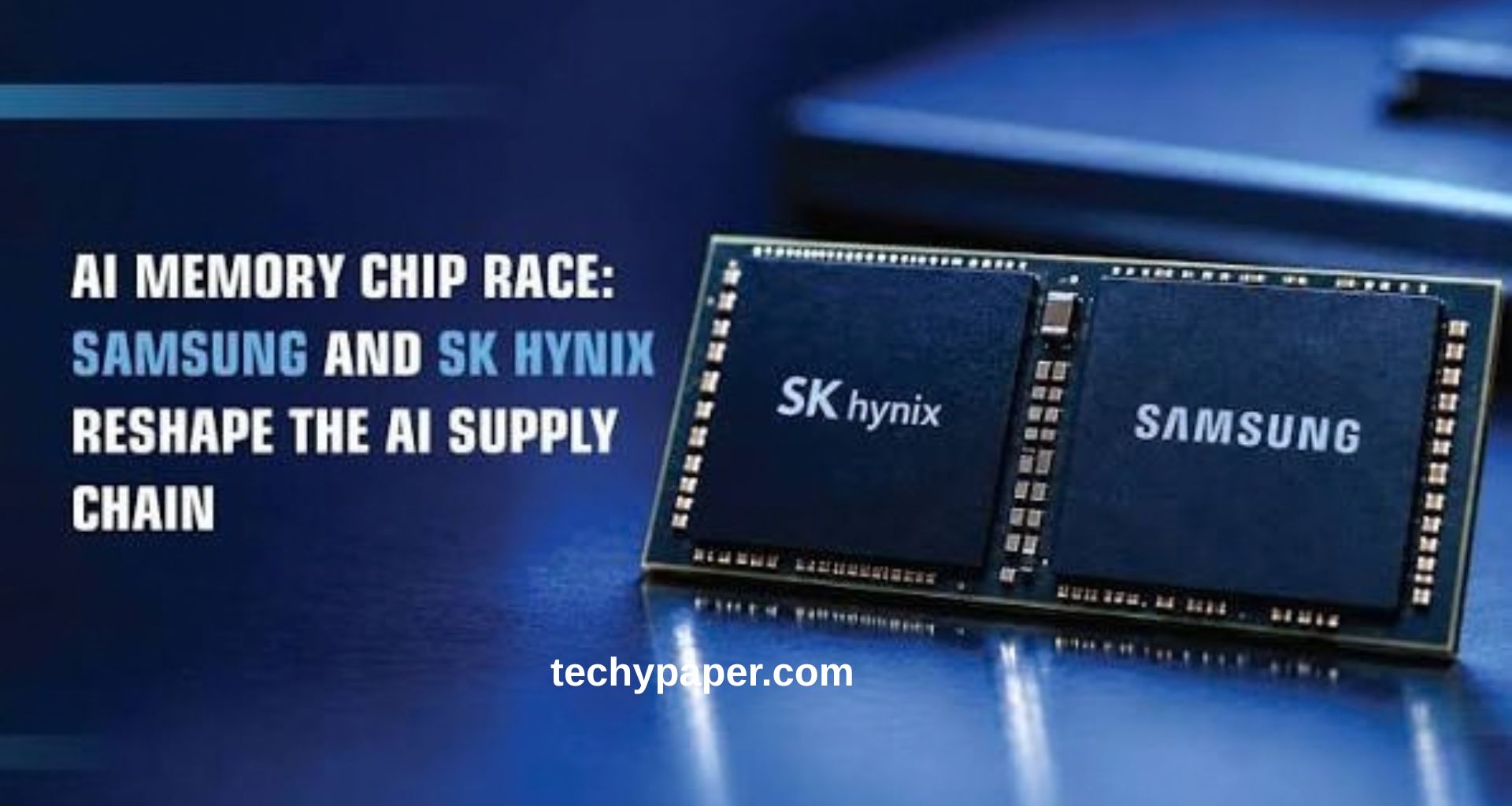
The global technology industry is entering a new era driven by the race for advanced chips. Semiconductors have become essential building blocks for artificial intelligence, smartphones, cloud computing, electric vehicles, robotics, defense systems, and modern data centers. As demand for faster and more efficient computing continues to grow, governments and technology companies are investing heavily in chip development and manufacturing.
The competition extends beyond producing smaller transistors. Advanced chips now represent a strategic advantage in artificial intelligence, economic development, national security, and digital infrastructure. Companies that can design, manufacture, package, and supply high-performance semiconductors are gaining greater importance across the global technology ecosystem.
Read More: ew Computing Architectures Could Change How AI Runs on Everyday Devices
Why Advanced Chips Matter
Modern digital products depend on semiconductors. A smartphone may contain several specialized chips, while an AI data center can require large numbers of powerful processors working together.
Advanced chips deliver improvements in several important areas:
- Faster computing performance
- Lower energy consumption
- Better AI processing
- Improved device efficiency
- Greater data-processing capacity
- More powerful cloud infrastructure
- Enhanced graphics and gaming performance
Artificial intelligence has accelerated semiconductor demand dramatically. Generative AI systems require enormous computing resources for training and operation. This has increased demand for graphics processing units, AI accelerators, high-bandwidth memory, networking chips, and advanced packaging technologies.
The result is a semiconductor industry increasingly shaped by AI requirements.
Artificial Intelligence Is Fueling Chip Demand
AI has become one of the strongest forces behind the advanced chip race. Large language models, image-generation systems, autonomous technologies, and intelligent software require specialized hardware capable of processing huge amounts of data.
Traditional CPUs remain important, but AI workloads often depend heavily on GPUs and specialized accelerators. These processors can perform many calculations simultaneously, making them suitable for machine-learning applications.
As AI models become larger and more sophisticated, companies need increasingly powerful computing infrastructure. This creates a cycle in which better AI systems increase demand for better chips, while better chips make more advanced AI systems possible.
AI is therefore no longer simply a software story. It has become a semiconductor story as well.
The Importance of Smaller Chip Designs
One major area of competition involves process technology. Semiconductor manufacturers continue working toward smaller and more efficient transistor designs.
Smaller process nodes can potentially deliver higher performance and improved power efficiency. However, manufacturing at extremely advanced nodes requires sophisticated equipment, expensive factories, highly controlled production environments, and years of research.
Leading chip manufacturers are investing billions of dollars to develop next-generation production capabilities. These investments reflect the growing economic importance of semiconductor technology.
The transition to more advanced nodes is also becoming increasingly complex. Traditional transistor scaling alone is no longer enough. Chip designers are exploring new transistor structures, advanced materials, chiplets, 3D integration, and sophisticated packaging.
Chiplets Are Changing Chip Design
One of the most important trends in semiconductor development is the growing use of chiplets.
Instead of creating one enormous processor as a single piece of silicon, engineers can divide a complex system into smaller chip components. These chiplets can then be connected within a package.
This approach can offer several benefits:
- Flexible system design
- Better manufacturing efficiency
- Easier product customization
- Potential cost advantages
- Improved scalability
Chiplets are particularly attractive for AI and high-performance computing. They allow companies to combine different types of processing and memory technologies within a single system.
As chiplet ecosystems mature, semiconductor design could become more modular and flexible.
Advanced Packaging Has Become a Competitive Advantage
Chip manufacturing is only part of the equation. Advanced packaging has become equally important for high-performance computing.
Modern processors generate enormous amounts of data. Moving information between processing units and memory quickly and efficiently is critical for AI workloads.
Advanced packaging can bring processors and memory closer together, reducing communication distances and improving overall system performance.
Technologies such as 2.5D and 3D integration are becoming increasingly important. These approaches allow multiple components to work together within sophisticated packages.
This means semiconductor competition is expanding from wafer fabrication into packaging, testing, memory integration, and supply-chain management.
The Global Supply Chain Is Changing
For decades, semiconductor production developed into a highly globalized industry. Chip design, manufacturing equipment, materials, packaging, and final products often involve companies located across multiple countries.
The growing strategic importance of advanced chips is now encouraging governments to reconsider this model.
Countries want greater control over critical semiconductor capabilities. New investments in domestic manufacturing are being announced across major technology economies.
The objective is not necessarily complete independence. Semiconductor production is too complex for most countries to manage entirely on their own. Instead, governments are seeking more resilient and diversified supply chains.
This shift could change where future semiconductor factories, research centers, and packaging facilities are located.
Government Investment Is Increasing
Semiconductors have become a national economic priority. Governments are offering incentives, funding research, supporting manufacturing projects, and developing policies designed to strengthen domestic chip industries.
The reason is simple: advanced chips influence many strategic sectors.
AI, telecommunications, automotive technology, aerospace, defense, healthcare equipment, and consumer electronics all depend on semiconductor innovation.
Governments therefore increasingly view chip manufacturing as part of long-term technological competitiveness.
Public investment can also encourage private companies to build expensive manufacturing facilities that might otherwise take longer to justify financially.
China, the United States, Taiwan, South Korea, Japan, and Europe
The global chip race involves several major technology regions.
The United States remains highly influential in semiconductor design, AI processors, software ecosystems, and manufacturing equipment. American companies play major roles throughout the semiconductor value chain.
Taiwan is a critical center for advanced semiconductor manufacturing and plays an important role in supplying chips used by global technology companies.
South Korea has major strengths in memory technology and semiconductor manufacturing. Its companies are investing heavily in AI-related memory and advanced processing technologies.
Japan remains important in semiconductor materials, equipment, manufacturing technology, and components.
China has invested heavily in developing domestic semiconductor capabilities and reducing dependence on overseas technology. Its progress is closely watched because of the country’s enormous electronics market and growing technology sector.
Europe is also seeking to strengthen its semiconductor ecosystem, particularly in automotive chips, industrial technology, research, and manufacturing.
The result is a more competitive and strategically divided global semiconductor landscape.
The Rise of High-Bandwidth Memory
AI computing requires more than powerful processors. Memory technology has become a crucial part of performance.
High-bandwidth memory, commonly known as HBM, allows large volumes of data to move rapidly between memory and processors. This makes it particularly valuable for AI accelerators and high-performance computing systems.
As AI workloads grow, demand for advanced memory is rising alongside demand for processors.
This creates another important competition within the semiconductor industry. Companies are not only racing to build faster computing chips but also developing memory technologies capable of keeping up with them.
The future of AI hardware will depend on the combination of processors, memory, networking, and packaging rather than a single component.
Energy Efficiency Is Becoming More Important
Computing performance is no longer measured only by speed. Energy efficiency has become a major concern.
AI data centers can consume significant amounts of electricity because they operate large numbers of high-performance processors continuously.
More efficient chips can help reduce electricity consumption while delivering greater computing performance.
This is particularly important as businesses expand AI infrastructure. Data-center operators must consider electricity availability, cooling requirements, infrastructure costs, and environmental impact.
Future chip development will therefore focus heavily on performance per watt.
The Impact on Smartphones and Personal Computers
The advanced chip race is not limited to data centers.
Smartphones increasingly include dedicated AI processors capable of handling tasks directly on the device. This can improve features such as image processing, translation, voice recognition, personalization, and other intelligent functions.
Personal computers are also changing. AI-focused processors can run selected workloads locally instead of sending every task to cloud servers.
This creates opportunities for faster responses, improved privacy, and reduced dependence on internet connectivity for certain functions.
As semiconductor technology advances, AI capabilities are likely to become a standard part of everyday computing devices.
Automotive Technology Is Becoming Chip-Dependent
Modern vehicles have transformed into sophisticated computing platforms.
Electric vehicles, advanced driver-assistance systems, infotainment platforms, navigation systems, cameras, sensors, and automated driving technologies all require semiconductors.
Future vehicles could require even greater computing capabilities as software-defined vehicle architectures become more common.
This makes reliable semiconductor supply increasingly important for automotive manufacturers.
A shortage of critical chips can affect vehicle production, while advances in chip technology can enable new automotive features.
Robotics and Industrial Automation
Robotics is another sector benefiting from advanced semiconductor technology.
Industrial robots need processors capable of handling sensor data, machine vision, movement calculations, and real-time decision-making.
AI-powered robots require even greater computational capabilities. As companies adopt automation, demand for specialized processors will likely continue to increase.
Factories could use advanced chips to operate smarter machines, analyze production data, identify defects, and optimize manufacturing processes.
This could make semiconductor innovation an important part of the next generation of industrial development.
Challenges Facing the Semiconductor Industry
The advanced chip race comes with significant challenges.
The first is cost. Building a leading-edge semiconductor factory requires enormous investment.
The second is complexity. Modern chip manufacturing involves thousands of precise processes and highly specialized equipment.
The third challenge is supply-chain concentration. A disruption affecting one major supplier or region can create consequences across the global technology industry.
Another challenge is talent. Semiconductor companies need engineers and researchers with expertise in physics, electrical engineering, materials science, computer architecture, and manufacturing.
Finally, geopolitical tensions can affect access to technologies, equipment, materials, and markets.
These challenges make semiconductor strategy increasingly important for both businesses and governments.
What the Future of Advanced Chips Could Look Like
The next stage of semiconductor innovation will likely involve several technologies working together.
Smaller transistors may continue to improve performance. Chiplets could make processor design more flexible. 3D integration may enable denser computing systems. Advanced memory could improve AI performance, while specialized accelerators could handle increasingly specific workloads.
Researchers are also exploring new materials, optical technologies, neuromorphic computing, and other approaches that could complement traditional semiconductor architectures.
The future may not be defined by one universal processor. Instead, computing systems could become collections of specialized components designed for particular tasks.
How Businesses Will Be Affected
The chip race will influence businesses across almost every technology sector.
Companies developing AI products will need access to powerful computing infrastructure. Cloud providers will continue investing in processors and data centers. Automotive manufacturers will require reliable semiconductor supplies. Consumer electronics companies will compete to include AI features in their devices.
Businesses that understand semiconductor trends can make better long-term decisions about technology investment, supply-chain planning, and product development.
Smaller companies may also benefit as advanced computing becomes more accessible through cloud platforms and specialized hardware services.
The Broader Economic Impact
The semiconductor industry creates effects far beyond technology companies.
New chip factories can create engineering, manufacturing, logistics, and construction jobs. Semiconductor investments can also encourage development of universities, research centers, suppliers, and supporting industries.
Regions that establish strong semiconductor ecosystems may attract additional technology investment.
This makes the chip race an economic development opportunity as well as a technology competition.
Frequently Asked Questions
What are advanced chips?
Advanced chips are highly sophisticated semiconductors designed to deliver high computing performance, improved efficiency, or specialized capabilities. They are widely used in AI systems, smartphones, data centers, vehicles, and other modern technologies.
Why are advanced chips important for AI?
AI applications require enormous amounts of computation and memory bandwidth. Advanced processors and high-performance memory help AI systems process large datasets and run complex models more efficiently.
Why are governments investing in semiconductor manufacturing?
Governments want stronger and more resilient semiconductor supply chains. Chips are essential for economic growth, digital infrastructure, communications, transportation, and national security.
What are chiplets?
Chiplets are smaller semiconductor components that can be combined within one package to create a larger computing system. They can provide greater flexibility in chip design.
What is advanced packaging?
Advanced packaging refers to sophisticated techniques used to connect processors, memory, and other semiconductor components in compact and high-performance configurations.
Will advanced chips make computers faster?
Advanced chips can improve computing performance, efficiency, AI capabilities, and specialized workloads. The actual improvement depends on the processor architecture, software, memory, and application.
What industries depend on advanced chips?
AI, cloud computing, smartphones, personal computers, automotive technology, robotics, healthcare equipment, telecommunications, gaming, aerospace, and industrial automation all depend on semiconductor technology.
What is the future of advanced chip technology?
The future is likely to include smaller transistor designs, chiplets, 3D integration, advanced memory, specialized AI processors, improved packaging, and new computing architectures.
Conclusion
The race for advanced chips is reshaping the global technology industry from the ground up. AI growth, cloud computing, robotics, smartphones, electric vehicles, and modern data centers are increasing demand for faster, more efficient, and more specialized semiconductors. The competition now extends across chip design, manufacturing, memory, packaging, equipment, materials, and supply chains. Governments are becoming more involved, while technology companies are investing heavily in next-generation computing infrastructure.
