
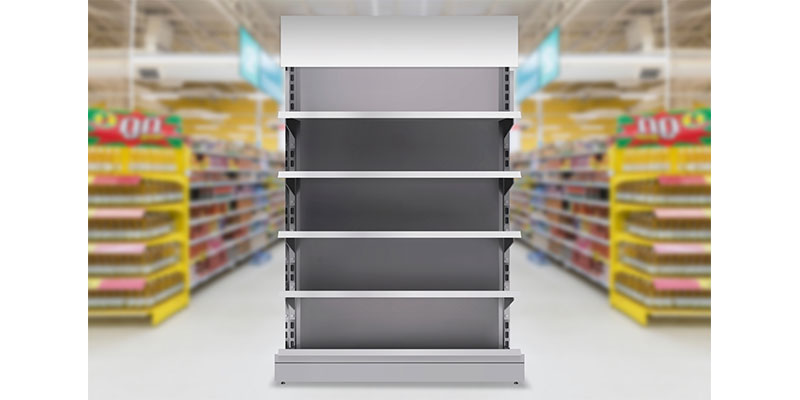
Retail floor space is one of the most expensive and consequential assets a store owner manages. Every square foot carries an implicit cost, and how that space is organized directly affects purchasing behavior, staff efficiency, and inventory turnover. Yet many businesses approach fixture selection as an afterthought — something decided at setup and rarely revisited until a problem becomes obvious.
The decision to invest in the right merchandising fixtures deserves more structured thinking than most retailers give it. Choosing poorly means frequent rearrangements, damaged goods, inconsistent presentation, and ultimately a shopping environment that works against the product rather than for it. Choosing well, on the other hand, creates a predictable, maintainable system that holds up across seasons, staff changes, and evolving inventory.
This guide is written for retail owners, store managers, and operations leads who are either setting up a new location or reconsidering their current fixture strategy. It covers the practical variables that matter most: product type, floor layout, fixture durability, adaptability, and long-term cost logic.
Understanding What Display Racks Actually Do in a Retail Environment
Fixtures are not neutral furniture. The way a product is held, angled, and exposed has a direct effect on whether a customer engages with it. display racks serve a functional role — they organize and protect inventory — but they also perform a visual and spatial role that influences how customers move through a store and what they notice first. Understanding this dual function is where smart buying decisions begin.
When retailers browse options for display racks, the range of available configurations can be wide. Spinner racks, slatwall racks, gridwall panels, gondola shelving, and freestanding multi-tier options all serve different operational needs. The mistake many buyers make is selecting fixtures based on appearance or price alone without first mapping how that fixture will work with their specific product dimensions, inventory depth, and customer traffic flow.
A rack that works well for packaged accessories may fail completely for hanging apparel. A fixture suited for a boutique with slow turnover and curated SKUs may become a maintenance problem in a high-volume store where inventory is restocked several times per week. The form of the rack needs to match the operational rhythm of the store.
The Relationship Between Fixture Type and Product Behavior
Different product categories interact with fixtures in fundamentally different ways. Hanging merchandise needs consistent spacing to stay visible and accessible. Packaged goods benefit from forward-facing presentation that keeps shelves looking full even when inventory is running low. Small, high-margin items require fixtures that naturally slow customer movement and encourage close examination.
Retailers who think through this relationship before purchasing avoid a common and costly outcome: buying fixtures that technically hold product but create visual clutter or access problems that reduce sales. The fixture should do part of the selling work by presenting the product at the right angle, in the right density, and in a format the customer can navigate without assistance.
Traffic Flow and the Placement Logic That Follows
Where a rack is placed matters as much as what kind of rack it is. Customer movement through a retail environment follows predictable patterns, and fixture placement either works with those patterns or creates friction. High-traffic areas near entrances and main aisles should hold product that benefits from impulse exposure. Specialty or high-consideration items are better positioned in areas where customers slow down naturally.
Fixtures placed without reference to traffic flow often result in product being overlooked, staff spending excessive time rearranging, and a store layout that feels confusing even when it is fully stocked. Floor planning and fixture selection should happen together, not in sequence.
Evaluating Fixture Durability and Long-Term Cost
The upfront price of a retail fixture represents only part of its actual cost. A lower-priced rack that requires frequent adjustment, develops visible wear after a single season, or breaks under normal product weight ends up costing more over time than a better-constructed option purchased at a higher initial price. This is a straightforward calculation, but it is often ignored when budgets are tight.
Durability should be evaluated against the specific demands of the environment. A fixture in a store with heavy daily foot traffic and frequent restocking needs to withstand more physical interaction than one in a low-volume specialty shop. Metal construction typically holds up better in high-demand environments, while lighter materials may be appropriate in settings where fixtures are handled carefully and less frequently.
Weight Capacity as a Practical Variable
One of the most commonly underestimated fixture considerations is load capacity. Retailers often select racks based on visual scale — whether the fixture looks appropriately sized for the product — without verifying whether the structure can consistently support a full inventory load. Over time, fixtures that carry more than their design allows will bend, sag, or become unstable, creating both product damage risk and potential safety concerns for customers and staff.
The Occupational Safety and Health Administration maintains guidelines around workplace safety that include retail environments, and unstable or overloaded fixtures can fall within scope of those standards depending on how they are used. Beyond regulatory considerations, a fixture that is visibly stressed under its load sends a poor signal about product quality and store professionalism.
Finish and Surface Durability Under Regular Use
Surface finish affects more than appearance. Chipped, scratched, or corroded racks reflect poorly on the products they hold. In environments where fixtures are frequently touched, moved, or exposed to cleaning products, the quality of the surface coating matters. Powder-coated metal holds up considerably better in active retail environments than painted or chrome-plated alternatives, which are more susceptible to visible wear over time.
Retailers who prioritize surface durability as part of their fixture selection process tend to spend less time managing the cosmetic decline of their store environment and more time focused on inventory and customer experience.
Adaptability and the Value of Reconfigurable Systems
Retail inventory changes. Seasonal product rotations, new vendor lines, promotional events, and shifting customer preferences all require a store to reorganize its floor on a regular basis. Fixtures that cannot be reconfigured to accommodate these changes become obstacles rather than assets.
Modular and adjustable fixture systems offer significant operational advantages for stores with dynamic inventory. Shelving heights that can be repositioned, hooks that accept different accessories, and rack configurations that can be expanded or contracted allow a single fixture investment to serve multiple merchandising needs over time. This flexibility reduces the need to purchase entirely new fixtures when product categories change, which is a meaningful cost consideration over a multi-year horizon.
Seasonal Inventory and Fixture Planning Cycles
Stores that carry seasonal merchandise need to plan fixture use across the full calendar year, not just the current quarter. A rack that is ideal for summer product may sit underutilized in winter if it cannot be repurposed. Businesses that think through seasonal transitions at the point of purchase tend to make better decisions about fixture configuration and quantity.
This planning also affects storage. Fixtures that cannot be disassembled or stacked efficiently take up significant backroom space during off-season periods, adding an indirect cost that is easy to overlook at the time of purchase.
Brand Consistency Across Multiple Store Locations
For retailers operating more than one location, fixture consistency becomes a meaningful consideration. When display racks differ significantly between stores, it creates inconsistency in the customer experience and complicates staff training, planogram execution, and inventory transfer between locations. Selecting a fixture system that can be replicated across sites simplifies operations and reinforces a consistent brand environment regardless of location size or layout differences.
Matching Fixture Selection to Store Format and Customer Expectation
The physical format of a retail store — its size, ceiling height, lighting approach, and overall aesthetic — should inform fixture selection in a direct way. A premium boutique with curated product and high average transaction value requires a different fixture approach than a high-volume convenience-oriented store where speed of access and restocking efficiency are the priorities.
Fixtures carry meaning in context. Simple, open wire rack systems communicate accessibility and price-consciousness, which aligns well with value-oriented retail. Enclosed, finished display structures suggest premium positioning and invite slower, more deliberate browsing. Neither approach is inherently better, but misalignment between fixture aesthetics and store positioning creates a subtle friction that affects how customers perceive and engage with the product.
Fixture Selection in Specialty and Trade Retail
Specialty retailers — those selling tools, hardware, outdoor equipment, beauty supplies, or similar category-focused product — face a different set of fixture requirements than general merchandise stores. Product weight, packaging irregularity, and the need for close-proximity comparison all affect which fixture configurations work best. In these environments, fixture selection needs to account for product-specific handling rather than relying on general-purpose solutions that may not support the category effectively.
Closing Considerations for Retail Fixture Decisions
Choosing display racks is a decision that has lasting consequences for store operations, inventory management, and customer experience. It is not a purchase to be made quickly based on price availability or what looks appropriate in a catalog image. The retailers who make good fixture decisions are those who take the time to map their product behavior, understand their traffic patterns, evaluate durability against real use conditions, and think about how their needs will evolve over the next few years.
The practical questions worth working through before any fixture purchase include: How often does inventory turn over and get restocked? How much flexibility does the floor layout need across seasons? What level of finish and structural quality will hold up under daily use in this specific environment? Are these fixtures intended for one location or multiple stores?
When these questions are answered honestly, fixture selection becomes a much more grounded decision — one that produces a store environment that works reliably, presents product effectively, and does not require constant correction or replacement. That is what the right display racks are supposed to deliver, and it is a standard that is entirely achievable when the buying process is approached with appropriate care.
