
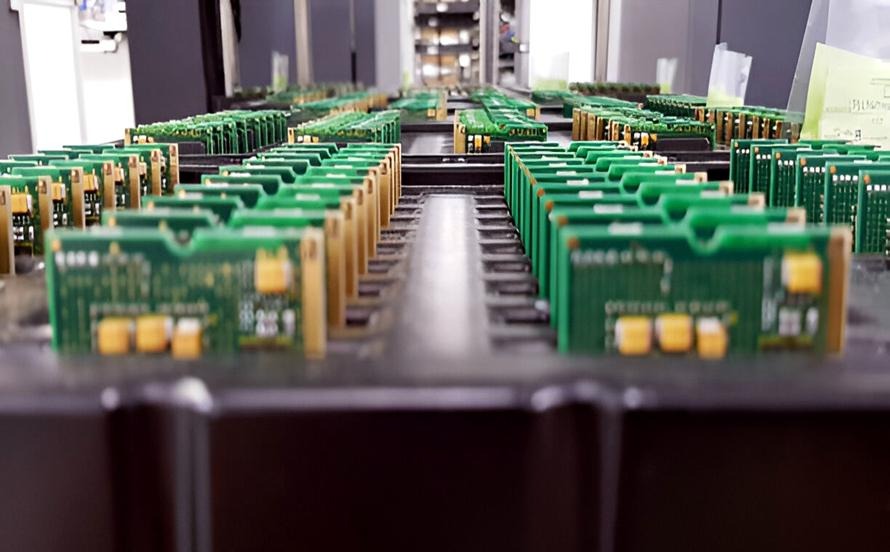
Printed circuit board (PCB) assembly is a critical stage in electronics manufacturing, where electronic components are mounted and connected to a fabricated circuit board to create a functional electronic product. In industries where product development cycles are becoming shorter and market demands are changing rapidly, manufacturers increasingly need efficient assembly processes that reduce production lead times without compromising quality. Quick turn PCB assembly addresses this need by prioritizing speed, efficient production planning, and timely delivery.
From prototype development to urgent production requirements, rapid PCB assembly helps engineers and businesses move from circuit design to functional hardware in less time. By coordinating material sourcing, component placement, soldering, and testing, manufacturers can accelerate project completion and identify design issues earlier. Understanding the process, benefits, applications, and selection criteria helps businesses determine when quick-turn manufacturing is the right solution.
What Is Quick Turn PCB Assembly?
Quick turn PCB assembly is an electronics manufacturing service designed to complete PCB assembly within a shorter lead time than standard production schedules. It focuses on reducing delays throughout the manufacturing process, including component procurement, board preparation, assembly, inspection, and functional testing.
The exact turnaround time depends on factors such as board complexity, component availability, order quantity, manufacturing capacity, and testing requirements. Simple prototype boards may be completed relatively quickly when all materials and production files are ready, while complex multilayer boards or assemblies containing specialized components may require additional time.
Rapid PCB assembly is particularly useful for engineering teams developing new products, companies responding to urgent customer requirements, and businesses that need small production batches before committing to larger manufacturing orders.
How Does the Quick-Turn PCB Assembly Process Work?
A well-organized manufacturing workflow helps reduce unnecessary delays while maintaining consistent assembly quality. The process typically includes the following stages.
1. Design File Submission and Review
The process begins when the customer provides the necessary manufacturing files, including Gerber files, a bill of materials (BOM), component placement data, and assembly drawings where applicable.
The manufacturer reviews these documents to identify potential design issues, missing information, component conflicts, and manufacturing constraints. This design-for-manufacturing review helps prevent avoidable delays caused by incorrect files or incomplete specifications.
Providing accurate and complete documentation at the beginning can significantly improve the overall turnaround time.
2. Component Sourcing and Material Preparation
Component availability is one of the most important factors affecting rapid PCB assembly. Manufacturers check the BOM, confirm component specifications, and identify suitable sourcing options for the required parts.
Common components may be available from existing inventory or established distributors, while specialized integrated circuits and obsolete components may require longer procurement periods.
Early material verification helps identify shortages before production begins. When substitutions are necessary, the proposed alternatives should be reviewed and approved by the customer to ensure electrical, mechanical, and functional compatibility.
3. PCB Fabrication and Assembly Planning
If the circuit boards are not already available, fabrication must be coordinated with the assembly schedule. The manufacturing team selects appropriate materials, layer configurations, surface finishes, and board dimensions according to the design requirements.
Production planning also determines the suitable assembly process, equipment setup, and inspection procedures. Coordinating PCB fabrication and component sourcing can help reduce waiting periods between manufacturing stages.
4. Component Placement and Soldering
Depending on the design, surface-mount technology (SMT), through-hole technology, or a combination of both may be used.
SMT assembly typically involves solder paste application, automated component placement, and reflow soldering. Through-hole components may be installed using manual, automated, wave-soldering, or selective-soldering methods, depending on the board design.
Efficient equipment setup and appropriate production scheduling help manufacturers complete assembly quickly while maintaining accurate component placement and reliable solder joints.
5. Inspection and Functional Testing
Speed should never eliminate essential quality checks. After assembly, the manufacturer inspects the boards for soldering defects, component placement errors, and other potential problems.
Automated optical inspection (AOI), X-ray inspection for suitable packages, electrical testing, and functional testing may be used depending on the assembly requirements.
These checks help identify manufacturing defects before shipment and reduce the likelihood of costly rework during product development or deployment.
Key Benefits of Quick-Turn PCB Assembly
Rapid assembly offers several advantages for companies operating in competitive electronics markets.
Faster Product Development
Shorter assembly lead times allow engineering teams to evaluate prototypes sooner. Developers can test circuit functionality, assess component performance, and identify design problems before moving into subsequent development stages.
Faster feedback can reduce delays between design revisions and help teams make informed engineering decisions.
Reduced Time to Market
Businesses developing new electronic products often work against launch deadlines. Accelerated assembly helps shorten the period between design completion and hardware validation, allowing companies to progress toward product launches more efficiently.
Although assembly speed is only one part of the development cycle, reducing manufacturing delays can make a meaningful difference to overall project schedules.
Greater Flexibility for Design Changes
Prototype development frequently involves changes to component values, layouts, connectors, and circuit configurations. Rapid PCB assembly supports shorter feedback cycles, making it easier for teams to manufacture and evaluate revised designs.
This flexibility is particularly valuable during research, product testing, and engineering validation.
Support for Small-Batch Production
Quick-turn manufacturing is not limited to prototypes. It can also support pilot runs, engineering samples, and limited production batches.
Businesses can use these batches to evaluate product performance, validate manufacturing processes, or meet immediate demand before scaling up production.
Earlier Identification of Manufacturing Issues
Manufacturing a prototype quickly gives engineering teams an opportunity to detect assembly and design problems earlier. Addressing these issues before high-volume production can help reduce waste, rework, and potential product failures.
Common Applications of Rapid PCB Assembly
Quick-turn PCB assembly supports a wide range of industries and development activities.
Consumer electronics: Startups and established brands use rapid assembly to test new devices, controllers, sensors, and connected products.
Medical electronics: Developers may use accelerated assembly for prototype testing and design validation of medical electronic equipment. Applicable safety, quality, and regulatory requirements must still be met.
Automotive electronics: Engineering teams can use rapid assembly to evaluate control circuits, sensor interfaces, and other electronic prototypes before proceeding to later development stages.
Industrial automation: Manufacturers use rapid PCB production to develop and test motor controllers, monitoring systems, communication modules, and automation equipment.
Research and development: Universities, laboratories, and electronics companies rely on fast prototype assembly to test new circuit concepts and evaluate alternative designs.
Telecommunications: Rapid assembly can support the development and testing of communication modules, signal-processing circuits, and networking hardware.
The suitability of rapid manufacturing depends on project complexity, component availability, technical specifications, and the required level of validation.
Factors to Consider When Choosing a Quick-Turn PCB Assembly Partner
Selecting a suitable manufacturing partner requires more than comparing quoted delivery dates. Several factors influence whether an accelerated production schedule can be achieved successfully.
Component availability: Confirm that the required components are in stock or can be sourced within the expected production window.
Manufacturing capabilities: Evaluate whether the manufacturer supports the board’s layer count, component packages, fine-pitch requirements, and soldering processes.
Quality control: Review inspection capabilities, testing options, and documented procedures for managing manufacturing defects.
Communication and project coordination: Clear communication about file requirements, component shortages, engineering questions, and production status helps prevent avoidable delays.
Pricing and turnaround commitments: Compare the total project cost, including fabrication, component sourcing, assembly, testing, and expedited handling fees. Confirm what the quoted delivery schedule includes.
Production scalability: If a prototype performs successfully, a manufacturing partner capable of supporting subsequent production volumes can simplify the transition from development to commercialization.
Conclusion
Quick turn PCB assembly helps electronics businesses accelerate prototype development, validate designs earlier, and respond to urgent manufacturing requirements. By combining efficient material sourcing, coordinated production planning, appropriate assembly technologies, and effective quality control, manufacturers can reduce lead times without treating quality as an afterthought.
When evaluating Quick-Turn PCB Assembly Services, businesses should assess manufacturing expertise, component sourcing capabilities, inspection procedures, pricing transparency, and the ability to meet project-specific delivery requirements. Selecting the right partner can help streamline product development and create a more efficient path from circuit design to a functional electronic product.
