
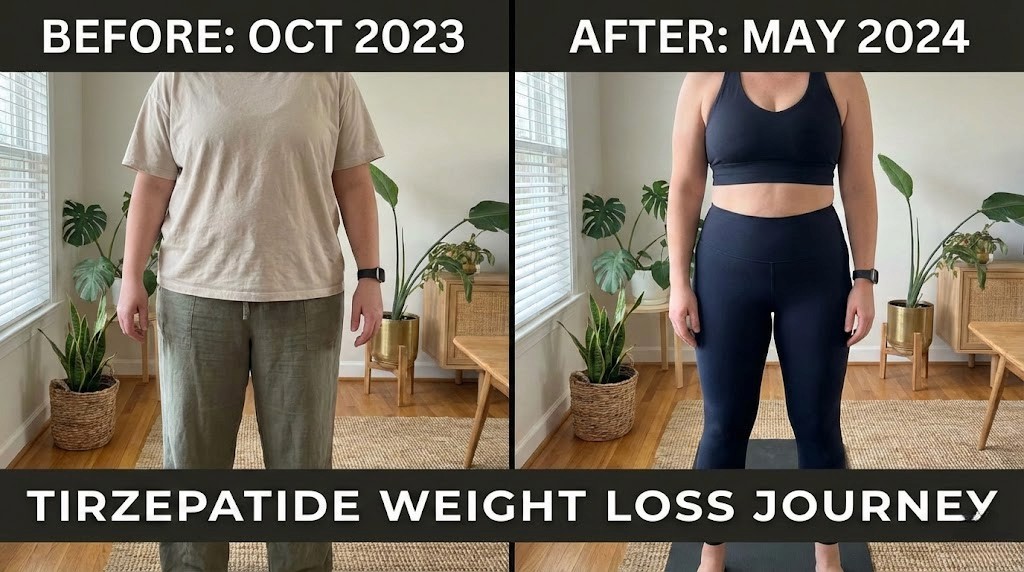
Seeing tirzepatide weight loss before and after results can make you curious about what your own transformation might look like. Photos and personal stories can be motivating, but they do not always show the full picture. Weight loss with tirzepatide develops over time, and results can vary significantly from one person to another.
Tirzepatide works by acting on GIP and GLP-1 pathways that influence appetite, food intake, and blood sugar regulation. As appetite decreases, many people find it easier to reduce their calorie intake and maintain healthier eating habits. However, there is no fixed timeline or guaranteed amount of weight loss.
FitRx provides virtual healthcare and weight-management support for eligible patients who want professional guidance throughout their treatment. Understanding realistic tirzepatide before and after expectations can help you focus on sustainable progress rather than comparing your body with someone else’s results.
What Can Tirzepatide Weight Loss Before and After Results Look Like?
Tirzepatide weight loss results can differ based on starting weight, dosage, treatment duration, lifestyle, health status, and individual response. Some people experience noticeable changes within the first few months, while others see more gradual progress.
Early changes may include reduced hunger, smaller portions, and fewer cravings. Physical changes can become more noticeable as weight loss continues, particularly around the waist, face, hips, and other areas where the body stores fat.
Clinical research provides a more reliable way to understand potential results than individual before-and-after photographs. In clinical trials of tirzepatide for chronic weight management, participants experienced substantial average weight reductions over 72 weeks when combined with lifestyle intervention.
These averages should not be treated as promises. Your individual response may be faster, slower, or different from the results shown in clinical studies.
How Quickly Can You See Tirzepatide Before and After Changes?
Tirzepatide treatment generally begins with a lower dose and progresses gradually. This means the first few weeks may focus more on helping your body adjust than producing dramatic weight loss.
During the early weeks, you may notice changes in appetite before seeing major changes in your appearance. You might feel satisfied with smaller meals or find that cravings are easier to manage.
Over the following months, continued treatment can lead to more noticeable changes in body weight and measurements. However, weight loss does not usually occur at exactly the same rate every week.
FitRx supports eligible patients who want professional guidance while tracking their weight-loss progress and understanding how their individual response compares with their treatment goals.
What Does Tirzepatide Weight Loss Look Like After One Month?
The first month is typically an adjustment period. For Zepbound, the starting dose is 2.5 mg once weekly for four weeks before moving to a higher dose when appropriate. The starting dose is not intended to be a maintenance dose.
Because treatment begins gradually, some people may see only modest changes during the first month. Others may notice reduced appetite or changes in eating habits before significant scale changes occur.
Do not judge your overall treatment success based on the first four weeks alone. Early progress can provide useful information, but longer-term trends offer a better indication of how your body is responding.
If you have questions about your progress or are concerned that you are not losing weight, speak with your healthcare professional rather than changing your dose independently.
What Can You Expect After Three Months?
By three months, some people may begin noticing more visible changes in body weight and clothing fit. Appetite changes may also become more consistent as treatment progresses.
At this point, your healthcare professional may evaluate your response to treatment, how well you tolerate your current dose, and whether your treatment plan remains appropriate.
Your before-and-after comparison can include more than photographs. Tracking your weight, waist measurement, energy levels, eating habits, and physical activity can provide a broader view of your progress.
Remember that plateaus and fluctuations can happen. A few weeks of slower weight loss does not necessarily mean the medication has stopped working.
What Results Can You Expect After Six Months?
Six months can provide a more meaningful picture of your overall tirzepatide transformation than the first few weeks. By this point, eligible patients may have progressed through dose escalation and established a maintenance dose under professional guidance.
Clinical trial evidence shows that tirzepatide can produce substantial weight loss over longer treatment periods. In the SURMOUNT-1 trial, adults with obesity or overweight and at least one weight-related condition who received tirzepatide experienced significant average weight reductions over 72 weeks compared with placebo.
Individual results still vary. Starting weight, treatment adherence, dose, diet, physical activity, and individual biology can all influence the outcome.
Your six-month progress should therefore be evaluated according to your own starting point and treatment goals rather than someone else’s before-and-after photograph.
What Does a Tirzepatide Transformation Look Like After One Year?
A year of consistent treatment can result in meaningful changes for many eligible patients. Longer-term studies provide stronger evidence for tirzepatide’s weight-loss potential than short-term before-and-after comparisons.
In clinical research, participants receiving tirzepatide experienced substantial average reductions in body weight over 72 weeks. The amount varied across treatment groups and individuals.
A tirzepatide transformation may involve more than a lower number on the scale. Changes can include reduced waist circumference, improved mobility, different clothing sizes, and greater confidence in daily activities.
However, body composition can change at different rates. Two people who lose the same amount of weight may look different because of differences in height, muscle mass, body-fat distribution, and starting body composition.

What Factors Affect Tirzepatide Weight Loss Results?
Your tirzepatide weight loss results depend on more than the medication itself. Several factors can influence how quickly and how much weight you lose.
Starting weight is one factor. People with higher starting body weights may lose more pounds overall, even when their percentage weight loss is similar to someone with a lower starting weight.
Your medication dose, treatment duration, adherence, food intake, physical activity, sleep, and individual metabolism can also affect your progress. Health conditions and other medications may influence results as well.
This is why comparing your progress with a friend’s or an online testimonial can be misleading. Your treatment response should be assessed according to your own health and goals.
Why Does Tirzepatide Weight Loss Slow Down?
Weight loss often becomes less predictable as treatment continues. You may experience periods of rapid progress followed by weeks when your weight changes very little.
As your body weight decreases, your energy requirements can also change. Your appetite, activity level, food intake, and other factors may shift throughout treatment.
A temporary plateau does not automatically mean that tirzepatide has stopped working. Your healthcare professional can review your progress over time and determine whether your treatment plan needs adjustment.
Avoid increasing your dose simply because the scale has stopped moving for a short period. Dose changes should follow your prescribed treatment plan.
How Can You Track Your Tirzepatide Weight Loss Progress?
Tracking your progress can help you see changes that may not be obvious from looking at the scale alone. Weekly weigh-ins can show a general trend, while waist measurements can provide additional information about changes in body size.
Before-and-after photographs can also be useful if taken consistently. Try to use similar lighting, clothing, posture, and camera distance so that comparisons are more meaningful.
You can also record changes in appetite, portion sizes, physical activity, energy, and how your clothes fit. These details can show improvements that a scale does not capture.
FitRx provides virtual weight-management support for eligible patients who want professional guidance while monitoring their progress and discussing changes in their treatment response.
Should You Compare Your Results With Tirzepatide Before and After Photos?
Before-and-after photographs can be inspiring, but they should not become a benchmark for your own treatment. Lighting, posture, clothing, camera angles, and photo editing can significantly change how someone’s body appears.
Even genuine results are highly individual. Someone may lose weight faster because of differences in starting weight, treatment duration, dosage, lifestyle, or biological response.
Instead of asking whether your body looks exactly like another person’s tirzepatide transformation, focus on whether you are making healthy progress toward your own goals.
A healthcare professional can help you interpret your results more accurately and determine whether your current treatment is working as expected.
What Can You Do to Support Tirzepatide Weight Loss?
Tirzepatide can support weight loss, but lifestyle habits remain important. A balanced eating pattern can help you get adequate protein, fiber, vitamins, and minerals while maintaining an appropriate calorie intake.
Protein-rich foods can be particularly useful during weight loss because adequate protein supports lean muscle maintenance. Vegetables, fruits, whole grains, and other nutrient-dense foods can also contribute to a balanced diet.
Physical activity can complement treatment by supporting cardiovascular health, strength, mobility, and overall fitness. Resistance training can be particularly useful for maintaining muscle during weight loss.
Sleep and stress management also deserve attention. Consistent healthy habits can make it easier to maintain progress as your treatment continues.
How Can FitRx Support Your Tirzepatide Weight Loss Journey?
Understanding tirzepatide weight loss before and after results is easier when you have realistic expectations and professional support. FitRx provides virtual healthcare and weight-management support for eligible patients who want guidance throughout their treatment journey.
Through virtual care, eligible patients can discuss their weight-loss goals, medication response, appetite changes, nutrition, lifestyle habits, and progress with healthcare professionals.
FitRx focuses on making professional weight-management care convenient while helping eligible patients stay connected with healthcare support. If your progress feels slower than expected or you have questions about your treatment, professional guidance can help you understand the next steps.
Frequently Asked Questions About Tirzepatide Before and After Results
How much weight can you lose with tirzepatide?
Weight loss varies significantly from person to person. Clinical trials have shown substantial average weight reductions over longer treatment periods, but individual results depend on factors including dose, treatment duration, starting weight, lifestyle, and response.
When do you start seeing tirzepatide weight loss results?
Some people notice appetite changes within the first several weeks, while visible weight loss may develop gradually. More meaningful results are generally evaluated over several months rather than individual weeks.
What does tirzepatide before and after look like after three months?
Some people may notice changes in body weight, waist measurements, clothing fit, and appetite after three months. However, the amount of change varies considerably between individuals.
Can tirzepatide cause significant weight loss?
Yes. Clinical trials have demonstrated significant average weight loss with tirzepatide in eligible adults when combined with lifestyle intervention. Individual results are not guaranteed.
Why are my tirzepatide weight loss results slower than someone else’s?
Differences in starting weight, dose, treatment duration, diet, activity, health conditions, medications, and individual biology can all affect weight-loss speed.
Does tirzepatide weight loss happen every week?
Not necessarily. Weight can fluctuate because of fluid levels, digestion, food intake, activity, and other factors. Longer-term trends are more useful than individual weekly measurements.
How can I track my tirzepatide weight loss progress?
Track your weight regularly and consider recording waist measurements, clothing fit, appetite, activity, and other changes. Consistent before-and-after photos can also help you see gradual physical changes.
Conclusion
Tirzepatide weight loss before and after results can look very different from one person to another. Some people notice appetite changes early, while visible body changes may develop gradually over several months. Clinical research shows that tirzepatide can produce substantial average weight loss over longer treatment periods, but individual results are never guaranteed.
Your tirzepatide transformation depends on many factors, including your starting weight, treatment duration, prescribed dose, nutrition, physical activity, adherence, and individual response. Comparing your progress with online before-and-after photos can create unrealistic expectations, so it is better to focus on your own long-term trend.
FitRx provides virtual healthcare and weight-management support for eligible patients who want professional guidance throughout their treatment. With appropriate medical care, healthy lifestyle habits, and realistic expectations, you can focus on sustainable weight-loss progress rather than chasing a specific before-and-after result.
