
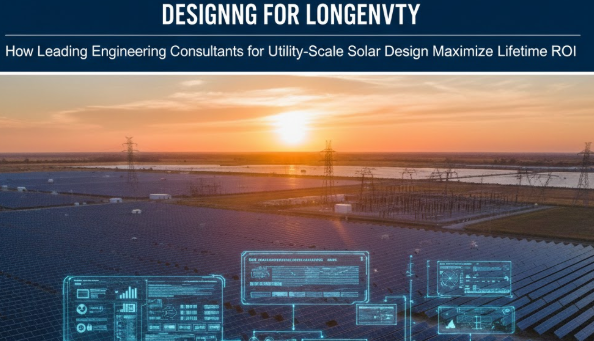
As the global demand for renewable energy intensifies, the role of utility-scale solar design has become more critical than ever. For large-scale solar projects, the engineering design plays a pivotal role in maximizing both performance and return on investment (ROI). A well-designed solar farm can deliver reliable energy for decades, significantly impacting its long-term financial success. Leading engineering consultants specialize in ensuring that these projects not only meet current energy needs but also maximize their lifetime ROI by focusing on durability, efficiency, and smart integration from the outset. This article explores how leading engineering consultants for utility-scale solar design optimize the lifespan of solar farms and boost ROI over time.
The Growing Importance of Longevity in Utility-Scale Solar Design
Utility-scale solar farms are massive investments, often generating electricity for decades. The long-term performance and ROI of these projects depend heavily on the quality of their design and the materials used. A robust and efficient design ensures the solar farm operates at optimal capacity for its entire lifespan, avoiding costly repairs, minimizing downtime, and maximizing energy output.
With solar panel technology becoming more advanced, solar farms are expected to last longer, with many systems offering warranties of 25 to 30 years. However, to ensure that these systems remain functional and cost-effective for the long term, engineering consultants must adopt best practices for utility-scale solar design that focus on durability, efficiency, and ease of maintenance.
How Leading Engineering Consultants Maximize Lifetime ROI in Solar Design
1. Optimizing System Design for Maximum Efficiency
The first step in maximizing lifetime ROI is ensuring that the solar farm is designed for maximum efficiency. Leading engineering consultants take a holistic approach to utility-scale solar design, considering the specific site conditions and using advanced modeling tools to design solar arrays that capture the maximum amount of sunlight while minimizing energy losses.
Best practices for optimizing solar system design include:
- Maximizing panel orientation and spacing: Engineers carefully assess the location, sun exposure, and terrain to design a system that minimizes shading and ensures that panels are positioned for maximum sunlight capture throughout the day and year.
- Incorporating energy storage: By integrating energy storage systems like batteries, solar farms can store excess energy generated during peak sunlight hours and use it during non-sunny periods, reducing reliance on the grid and boosting long-term savings.
- Efficient inverter selection: Choosing high-efficiency inverters helps to ensure minimal energy loss during conversion from DC to AC power, optimizing the overall system efficiency.
2. Selecting High-Quality, Durable Materials
Utility-scale solar design isn’t just about how the panels are placed but also about the materials used in construction. Leading engineering consultants focus on selecting durable, high-quality components that will withstand environmental factors such as temperature fluctuations, humidity, and extreme weather events.
Best practices for material selection include:
- Corrosion-resistant materials: In areas with high humidity or near coastal regions, selecting corrosion-resistant components ensures that the solar farm maintains its efficiency without costly repairs or replacements.
- Weather-resistant panels: Panels should be able to withstand extreme conditions like hail, high winds, or snow. Choosing materials with strong warranties helps ensure that the system remains operational for decades.
- Quality control: Consultants ensure that all materials meet rigorous industry standards and pass quality tests before installation.
3. Ensuring Scalability and Future-Proofing
To maximize lifetime ROI, solar farms should be designed with scalability in mind. As energy demands increase or technology advances, the solar farm should be able to expand or upgrade without requiring a complete redesign.
Leading engineering consultants focus on creating flexible designs that allow for:
- Future system expansions: Designing for future capacity expansion ensures that the solar farm can increase its energy production without major disruptions or costly overhauls.
- Technology integration: Consultants help future-proof solar designs by ensuring compatibility with evolving technologies, such as energy storage systems or electric vehicle (EV) charging infrastructure.
4. Implementing Predictive Maintenance Strategies
Predictive maintenance is essential for prolonging the lifespan of utility-scale solar systems. By integrating sensors and real-time monitoring systems, engineers can continuously track the performance of solar panels, inverters, and other critical components.
Best practices for predictive maintenance include:
- Real-time monitoring: Using monitoring software to detect inefficiencies or potential failures before they result in system downtime or costly repairs.
- Regular performance analysis: Engineers regularly review data from the solar farm to identify trends and optimize system performance.
- Scheduled servicing: Proactively addressing minor issues through routine maintenance ensures that the solar farm operates efficiently without unexpected failures.
5. Focus on Grid Integration for Long-Term Stability
Proper grid interconnection is a key factor in maintaining long-term system stability and maximizing lifetime ROI. Leading engineering consultants ensure that the solar farm is effectively integrated into the local or national grid, minimizing energy losses and ensuring reliable distribution of electricity.
Best practices for grid interconnection include:
- Optimizing transmission efficiency: Properly sizing the transmission lines and using advanced inverters can help reduce energy losses during transmission.
- Grid synchronization: Ensuring the solar farm operates in sync with the grid prevents voltage fluctuations and ensures the system’s stability.
- Compliance with regulations: Meeting regulatory standards and grid codes helps avoid legal issues or penalties in the future.
6. Maximizing Energy Yield and ROI Over Time
The ultimate goal of a utility-scale solar design is to ensure that the system produces maximum energy yield over its operational life, providing the highest ROI for investors. To achieve this, engineering consultants use performance simulations and historical data to forecast energy production under different conditions, ensuring that the system is designed to meet or exceed expected energy yield targets.
7. Financing and Risk Mitigation
Successful solar development relies on securing financing that supports the long-term goals of the project. Engineering consultants work with project developers to create a clear financial model that accounts for initial investment, operational costs, and expected revenue streams from the solar farm’s energy production.
Risk mitigation strategies include:
- Financial modeling: Developing accurate cost and revenue projections to ensure a profitable and sustainable investment.
- Insurance and warranties: Ensuring that the solar farm is protected from unexpected maintenance costs and potential damages through insurance policies and product warranties.
Conclusion: Designing for Longevity and Maximizing ROI
To maximize lifetime ROI in utility-scale solar design, developers and operators must work closely with leading engineering consultants who specialize in creating efficient, durable, and scalable solar systems. By focusing on optimizing system design, selecting high-quality materials, implementing predictive maintenance, and ensuring proper grid interconnection, solar projects can deliver reliable and cost-effective energy for decades.
The expertise of engineering consultants ensures that every aspect of the solar farm, from inception to operation, is carefully planned and executed, resulting in long-term financial success. By investing in robust engineering practices, solar projects can not only contribute to a cleaner, sustainable future but also provide significant returns on investment for stakeholders.
