
Key Takeaways
The design of a pump greatly affects its noise levels—both the shape of the impeller and the materials involved matter. Composite materials typically outperform metals in sound-dampening capacity.
Pump orientation plays a significant role in noise generation. Generally, vertical installations tend to produce more sound due to vibrations traveling through the system; ensuring proper alignment of mounts can substantially reduce these vibrations.
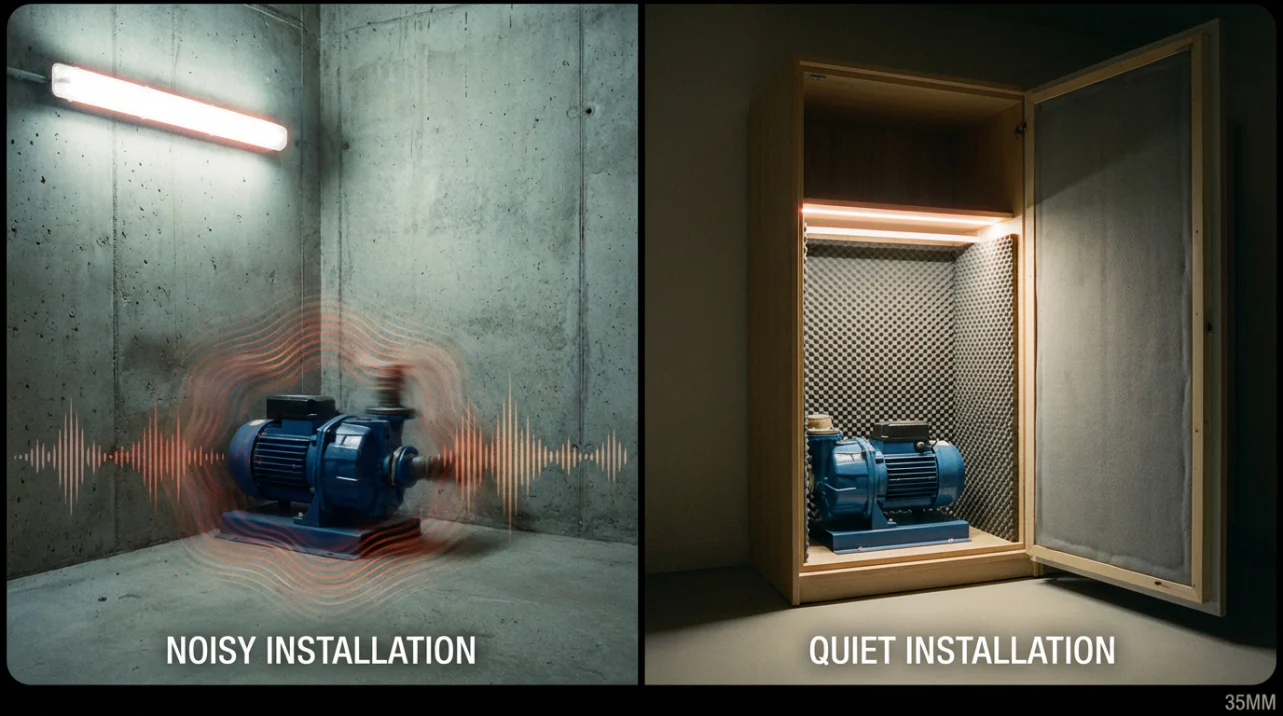
Implementing acoustic barriers and soundproofing materials, such as soundproof foam and Mass Loaded Vinyl (MLV), can greatly diminish pump noise when placed thoughtfully near the source of the noise.
Using vibration dampeners, like rubber mounts and sorbothane pads, can absorb the energy from pump operation, leading to a quieter environment; how they are installed is key to their effectiveness.
To manage noise levels effectively, regular maintenance is crucial. Worn parts or misaligned systems can amplify noise, making consistent checks essential.
The integration of smart technologies and IoT capabilities is a promising avenue for future noise reduction in pumps; real-time monitoring and adaptive control systems enable dynamic adjustments to sustain low noise levels.
Machine learning algorithms could improve predictive maintenance strategies, allowing water supply systems to preemptively tackle noise issues, thus enhancing overall efficiency.
Innovative Strategies for Minimizing Pump Noise in Water Systems
Understanding the Impact of Pump Design on Noise Levels
The design principle of a pump is fundamental to its noise output. Engineers have long debated the best configurations for reducing sound while maximizing efficiency. It all begins with the impeller design. A poorly designed impeller may create turbulence, hence increasing noise levels. It’s about flow dynamics here—smooth pathways are better than sharp turns. Furthermore, the material choice matters; metals tend to produce more sound compared to composite alternatives. Professionals often suggest opting for composite materials for their enhanced sound-dampening characteristics.
Pump orientation is another key element. Horizontal and vertical installations can produce different noise levels. Typically, vertical setups generate more sound as vibrations travel through the pipes. However, the installation process is just as vital; proper alignment of mounts can significantly cut down vibrations, making a noticeable difference, yet many overlook this step.
A frequent misconception is that larger pumps create more noise. In reality, it’s often the engineering behind them that shapes their sound profile. Smaller pumps, if poorly designed, can be noisier than well-constructed larger models. These nuances are essential for making informed design choices.
Advanced Acoustic Treatment Solutions to Explore
When developing a water supply system, it’s essential to explore options beyond mere design, especially when considering water supply system pump noise reduction. These materials, when positioned strategically around pumps, absorb and deflect sound waves, effectively lowering noise levels. Soundproofing foam is particularly popular; it’s cost-effective and simple to implement, though placement is everything—experts recommend targeting areas nearest to the noise source.
Another effective tactic involves noise-dampening insulation around pipes. This pipe insulation absorbs sound and mitigates transmission, contributing to quieter operations. Yet care must be taken, as excessive insulation can lead to condensation problems, complicating the situation. Striking the right balance is crucial for long-term efficiency.
“Investing in the right acoustic treatment can significantly improve comfort around noisy pumps.”
Additionally, soundproof enclosures are a go-to solution for especially loud pumping systems. These robust structures not only tackle noise but also protect equipment. Enclosures effectively contain sound and provide thermal insulation, resulting in a quieter, more energy-efficient environment. It’s straightforward—a practical answer to a pressing concern.
Practical Insights: Evaluating Noise Reduction Materials
Top Soundproofing Materials: What Professionals Recommend
Selecting materials for pump noise reduction is crucial. Various soundproofing materials address different needs, and understanding their properties is key for effective application. Here are some highly recommended materials:
- Mass Loaded Vinyl (MLV): This heavyweight, flexible material is ideal for walls, ceilings, and floors.
- Acoustic Foam Panels: These panels excel in sound absorption within enclosed areas, especially when placed on reflective surfaces.
- Resilient Channels: Adding these to existing walls can help decouple surfaces, reducing sound transmission significantly.
The effectiveness of chosen materials should never be underestimated. Research has shown that layering various types can greatly enhance soundproofing capabilities. For example, combining MLV with acoustic foam often delivers exceptional results. However, cost considerations must be made—investing in high-quality materials generally yields quieter operations and increased employee satisfaction.
How Vibration Dampeners Can Transform Your System
Vibration dampeners are an integral element of any effective noise reduction strategy. Their primary role is to absorb the energy generated during pump operation. The great benefit? Isolating vibrations diminishes overall noise levels. Yet many professionals underestimate the extent to which a well-chosen vibration dampener can improve system performance.
When selecting vibration dampeners, options like rubber mounts and sorbothane pads are favored for their ability to absorb shocks and vibrations. Sizing matters significantly; too large or too small can exacerbate noise rather than mitigate it, creating an ineffective solution.
Installation techniques also play a critical role. Inadequate mounting can actually heighten noise by transmitting vibrations through the structure. The guiding principle here is isolation—keeping vibrating components apart from those that don’t vibrate. The more effectively isolation is achieved, the quieter the system will be.
Common Myths About Pump Noise You Shouldn’t Believe
Separating Fact from Fiction: What Really Causes Noise
There are numerous myths surrounding pump noise. One widespread belief is that all pumps are inherently loud. In reality, modern advancements have significantly diminished noise levels. While some older models may still produce sound, many new designs come equipped with impressive noise reduction features.
A frequent misconception is the association between horsepower and noise. It’s not the case that all high-horsepower pumps generate excessive noise. Typically, it’s the design and engineering that dictate how sound is handled. Design quality outshines sheer power in this context.
“Not every noisy pump requires replacement; often, it’s merely a matter of better integration into current systems.”
There’s also confusion regarding the operational placement of pumps. Many believe submersible pumps are completely silent, but that’s not always true. Cavitation and vibration can still manifest, even underwater. Recognizing these realities can lead to better decisions when considering potential system upgrades.
Misunderstandings About Pump Maintenance and Its Role
The importance of maintenance in noise management cannot be overstated. Regular checks help ensure systems operate smoothly and quietly. Neglecting maintenance can lead to issues such as worn bearings or misalignments, which directly translate to noise concerns. Routine checks should never be seen as optional—operational efficiency hinges on them.
Another misconception suggests that older pumps are beyond repair. Professionals often discover that simple maintenance and intelligent upgrades can yield substantial noise reduction. This requires a shift in thinking. Treating pumps as ongoing investments ensures their efficiency and functionality can be upheld or even improved.
Future Trends: The Next Wave in Pump Noise Reduction Technology
Smart Technologies Enhancing Noise Control in Water Systems
The future of pump noise reduction is increasingly tied to technological advancements. Smart technologies are evolving past basic features; they’re now being integrated for real-time monitoring. For example, deploying sensors to monitor operational noise can significantly improve maintenance schedules. A data-driven approach fosters more informed decision-making.
Adaptive control systems represent another exciting frontier. They can dynamically alter pump speeds based on current demand, effectively minimizing noise during lower capacity usage. The remarkable aspect of this technology is its nimbleness—it responds swiftly to operational needs while keeping sound levels in check.
Experts are especially enthusiastic about the role of AI in predictive maintenance. This technology can help detect potential noise issues before they arise. Imagine receiving an alert before a pump starts to show signs of aging. That’s the advantage of technology in strengthening noise control.
The Role of IoT in Monitoring Pump Performance and Noise Levels
The landscape of pump systems is being transformed by Internet of Things (IoT) technology. By incorporating noise monitoring and performance assessment within IoT frameworks, operators gain insightful data. Coupled with analytics, these systems offer actionable information, allowing for quicker responses and refined operational strategies.
Businesses can easily set up alerts to notify them when a pump functions outside typical noise parameters. This proactive strategy not only ensures timely maintenance but also helps keep noise to a minimum. Ultimately, clients tend to see increased system longevity and fewer noise complaints. However, it requires a visionary approach—envisioning future systems as interconnected networks can pave the way for innovative noise reduction strategies.
“Adopting IoT technology is sure to revolutionize strategies for maintaining quiet water supply systems.”
Looking ahead, machine learning algorithms promise to further refine noise reduction techniques. Systems might adapt based on past data, creating ongoing predictive maintenance schedules. The possibilities are vast. A future with substantially quieter pumps isn’t merely a hope; it’s a tangible goal.
FAQ
What types of pumps are best for noise reduction?
Typically, the best pumps for noise reduction feature advanced engineering designs and high-quality materials. Look for models utilizing composite materials and smooth impeller designs—these aspects can significantly lessen turbulence and noise.
How often should maintenance be performed to keep pump noise levels low?
Experts typically recommend maintenance checks every six months to a year, depending on usage levels. Regular inspections can identify misalignments or wear before they evolve into larger noise issues.
Can noise reduction strategies be applied to existing pump systems?
Certainly. There are many ways to retrofit systems, like installing vibration dampeners, soundproofing materials, and acoustic barriers. Such measures can drastically improve noise levels without requiring total pump replacements.
Is insulation effective for reducing noise around pump systems?
Yes, insulation can significantly lessen sound if applied properly. However, it’s essential to prevent condensation problems, which can create additional challenges. Selecting the right insulation type and quantity is crucial to achieving balanced effectiveness.
What role does pump placement play in noise levels?
Pump positioning is critical; placing pumps far from living spaces can greatly decrease perceived noise. Additionally, strategic installation that takes vibration paths and acoustic barriers into consideration is vital for sound management.
Are there specific brands known for quieter pump systems?
Many brands provide noise-reducing pump options, but those recognized for pioneering noise reduction technologies tend to lead the market. Research indicates companies focusing on composite materials and cutting-edge designs often deliver quieter models.
How does smart technology enhance pump noise reduction?
Smart technology enables real-time monitoring and adaptive control features that optimize pump usage. By adjusting speed dynamically based on demand, these systems can significantly lower noise levels during low capacity operations.
What should operators do if they notice increasing noise levels in a pump system?
Immediate action is essential. Operators must evaluate possible causes such as wear or misalignment. Subsequently, corrective maintenance should be initiated to restore optimal performance and minimize noise. Failing to address the issue could lead to more serious problems in the future.
Useful Resources
- American Society of Mechanical Engineers (ASME)
- The Hydraulic Institute
- International Organization for Standardization (ISO)
- Acoustical Society of America
- American Psychological Association (APA) – for noise and its effects
- International Atomic Energy Agency (IAEA) – addressing noise in systems
- IHS Markit – for market research on pump technologies
- Katana Technologies – focuses on smart technologies in pump systems
- National Property Management Association
