
For most Indian HR teams, attendance has become a daily grind of registers, spreadsheets, and follow-ups. A well-implemented attendance management system changes that equation by handling capture, regularisation, and reporting automatically, giving HR back hours that used to disappear into administrative firefighting.
The Hidden Cost of Manual Attendance Management
Manual attendance tracking rarely stays contained to simply marking employee attendance. It spreads into payroll corrections, leave disputes, and compliance scrambles. The hidden cost of manual attendance includes:
- Data Entry & Regularisation: HR teams spend hours each week cross-checking biometric logs, leave applications, and manual registers before payroll can even begin.
- Payroll Delays & Disputes: A single missed punch or unrecorded half-day can trigger a chain of clarifications, corrections, and employee grievances.
- Compliance Exposure: Under India’s evolving Labour Codes, accurate work hours and overtime records are critical, and inconsistent manual logs create audit risk.
- Opportunity Cost: Every hour spent reconciling attendance sheets is an hour not spent on retention, engagement, or workforce planning.
How does Automated Attendance Tracking work?
An automated attendance management system captures, validates, and processes attendance data without manual intervention, syncing it directly with payroll and leave records. It undertakes all aspects of employee attendance, including:
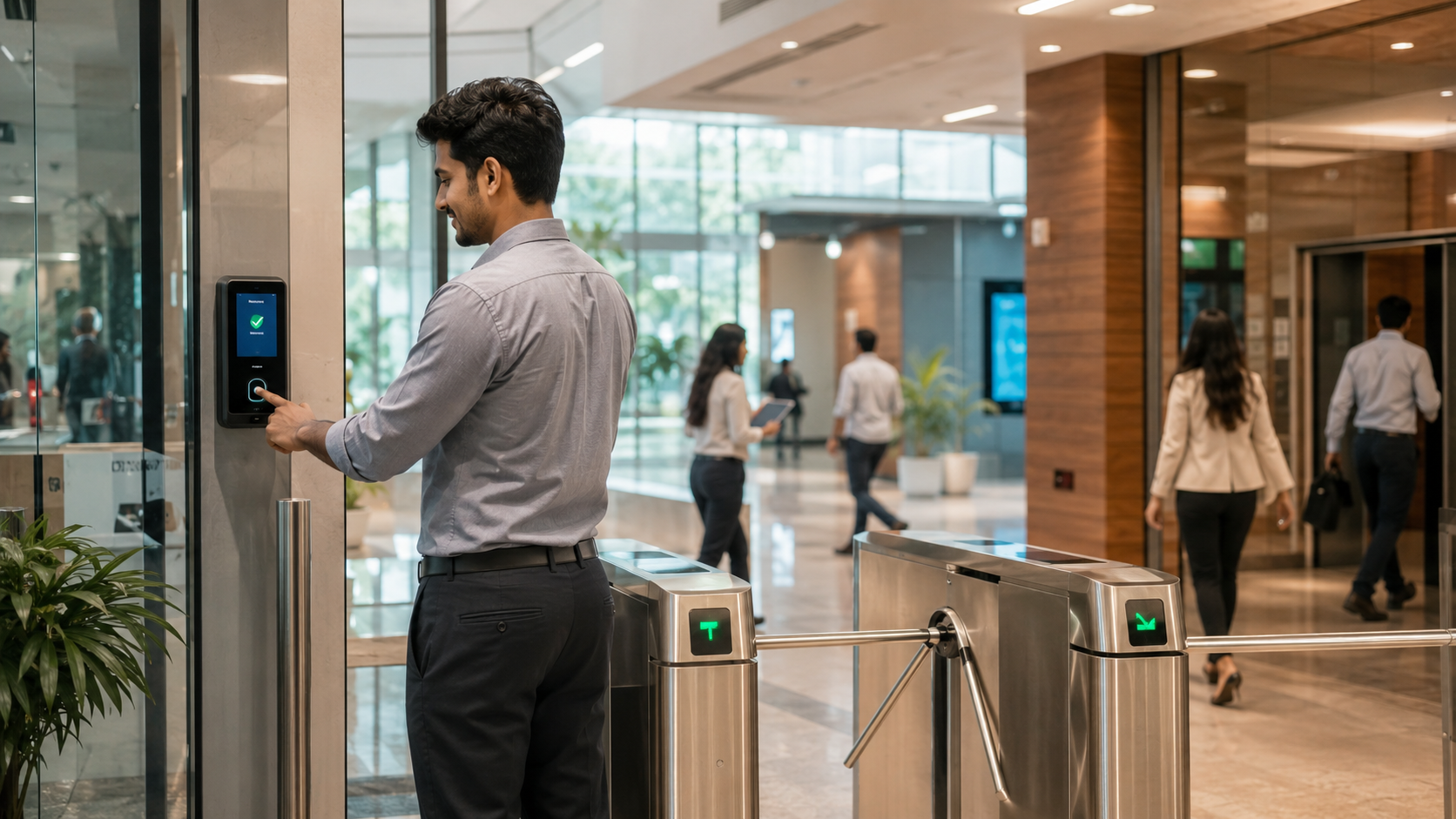
- Real-time Capture: Using biometric devices, mobile apps, geo-fencing, or facial recognition, attendance can be captured in offices, fields, and remote/hybrid teams.
- Auto-sync with Payroll: Sync between approved leave, holidays, and shift schedules automatically reflects in the final attendance count, resulting in accurate payroll.
- Exception Flagging: The system flags late arrivals, missed punches, or unusual absenteeism patterns, surfaced to HR only when action is genuinely needed.
This automation shifts HR’s role from constantly monitoring attendance to reviewing exceptions, which becomes a far smaller and targeted task.
Reducing HR’s Daily Workload with Automation
The best HRMS platforms remove repetitive, error-prone steps that consume the bulk of HR’s time on attendance, replacing them with system-driven accuracy. Here is how automated attendance tracking reduces HR’s daily workload:
- Eliminates Manual Entries & Regularization: Attendance data flows directly from the capture device into the system of record. There is no spreadsheet stitching, no manually cross-referencing registers against leave applications.
- Reduces Payroll Errors: When attendance data is accurate at the source, payroll processing needs far less correction. Fewer errors mean fewer employees at HR’s desk disputing their salary slip.
- Reduces Compliance Reporting Time: Automated systems maintain audit-ready records of work hours, overtime, and leave, which are critical as Labour Code enforcement tightens across states.
- Reduces HR’s Load: As these systems come with a query-resolution desk in the form of ESS (Employee Self-Service) portals. Using these portals, employees can check their attendance, apply for corrections, and view leave balances without routing every query through HR.
- Replaces Manual Trendspotting: Instead of manually scanning logs to spot attrition-risk patterns or chronic absenteeism, dashboards surface these trends automatically, turning attendance data into an early-warning signal rather than just a payroll input.
Choosing the Ideal Attendance Tracking System
Not every system delivers the same workload reduction. A few things worth checking before implementation:
- Payroll & HRMS Integration: Attendance data should flow directly into payroll without manual export-import steps.
- Mobile & Remote-work Compatibility: Geo-fencing and app-based punch-in for field and hybrid employees.
- Compliance-ready Reporting: Built-in alignment with Indian labour law requirements, including overtime and work-hour tracking.
- Ease of Adoption: A system employees will use consistently, not one that requires constant HR nudging.
Modern platforms combine these capabilities within a single attendance management system, syncing attendance directly with payroll, leave, and compliance modules, so HR teams spend less time verifying and correcting data and more time on strategic work that requires human intervention.
Conclusion
Having an automated attendance tracking system reduces HR workload by multiple times, as it automates almost all aspects of employee attendance. It not only improves data accuracy and efficiency, but also results in more free time for HR teams, as they need not keep on verifying employee attendance manually. With automated systems in place, HR teams can also stay up to date with statutory compliance, as well as capture trends more effectively, making attendance systems a must-have software for them.
FAQs
Does an attendance management system reduce payroll errors?
Yes; by capturing attendance accurately at the source and syncing it directly with payroll, automated systems significantly reduce the manual corrections and disputes that come from inconsistent manual tracking.
Can automated attendance systems handle remote and field employees?
Yes; mobile apps with geo-fencing and facial recognition allow remote, hybrid, and field employees to mark attendance accurately without relying on physical biometric devices.
Is automated attendance tracking compliant with Indian labour laws?
A well-built automated attendance tracking system maintains audit-ready records of work hours, overtime, and leave, helping organisations stay aligned with Labour Code requirements.
