
Many smokers who are thinking about switching to vaping ask one important question: How much nicotine is in a vape compared to a cigarette? Understanding the difference can help you make a more informed decision about your nicotine intake and overall habits.
With modern high-capacity devices like the RandM Tornado 15000, nicotine delivery has become more efficient and customizable. However, the way nicotine works in vapes is different from traditional cigarettes. In this guide, we’ll break down the numbers, explain how nicotine absorption differs, and help you understand what you’re actually consuming.
Understanding Nicotine in Cigarettes
A traditional cigarette contains about 10–12 mg of nicotine in total. However, your body does not absorb all of that amount.
On average:
- A single cigarette delivers 1–2 mg of absorbed nicotine
- It usually takes about 10–15 puffs to finish one cigarette
- Nicotine reaches the brain within 10 seconds
The rest of the nicotine in the cigarette burns away or is lost in sidestream smoke. This means smokers absorb only a fraction of the total nicotine content listed.
How Nicotine Works in Vapes
Vapes work differently because they heat e-liquid instead of burning tobacco. The nicotine is dissolved in a mixture of propylene glycol (PG), vegetable glycerin (VG), and flavorings.
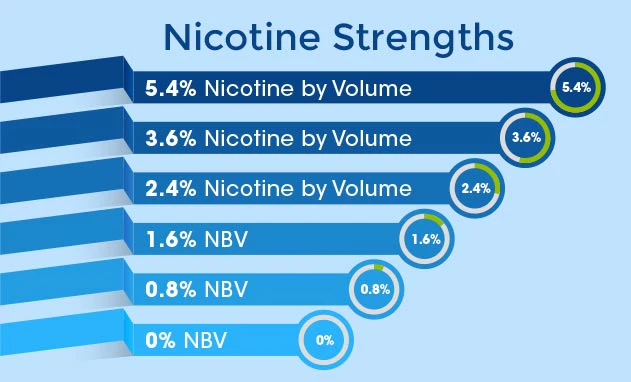
Nicotine strength in vapes is measured in:
- Milligrams per milliliter (mg/mL)
- Or as a percentage (%)
For example:
- 20 mg/mL = 2% nicotine
- 50 mg/mL = 5% nicotine
Unlike cigarettes, you control how much nicotine you consume by:
- The nicotine strength of the e-liquid
- How many puffs you take
- How long you inhale
- How frequently you vape
Nicotine in a Vape vs a Cigarette: Direct Comparison
Here’s a general comparison to simplify things:
| Product | Average Nicotine Delivered |
| 1 Cigarette | 1–2 mg absorbed |
| 10 Cigarettes (Half Pack) | 10–20 mg absorbed |
| 1 Pack (20 Cigarettes) | 20–40 mg absorbed |
Now let’s look at vaping.
If you use a 20 mg/mL (2%) vape:
- 1 mL of e-liquid contains 20 mg of nicotine
- Not all of it is absorbed — actual absorption varies
If you use a 50 mg/mL (5%) nicotine salt vape:
- 1 mL contains 50 mg of nicotine
- Absorption is more efficient compared to freebase nicotine
However, absorption through vaping tends to be slightly slower than cigarettes, especially with lower-strength liquids.
How Many Vape Puffs Equal One Cigarette?
This is one of the most searched questions online.
On average:
- 1 cigarette = 10–15 puffs
- Many experts estimate 10–15 vape puffs roughly equal one cigarette, depending on device power and nicotine strength
But this is not exact. Vape puffs vary in size and intensity. A long, deep puff from a high-powered device can deliver more nicotine than a short puff from a smaller device.
How Devices Like RandM Tornado 15000 Compare
High-capacity disposables such as the RandM Tornado 15000 are designed to deliver consistent vapor across thousands of puffs. These devices often use nicotine salt e-liquid, which provides:
- Smoother throat hit
- Faster nicotine absorption
- Higher nicotine strength options
For example, if a RandM Tornado 15000 contains 20 mg/mL nicotine and holds around 18–20 mL of e-liquid, the total nicotine content in the device can be quite high overall. However, users typically consume it gradually over days or weeks — not all at once.
The key difference from cigarettes is control. With vaping, you decide how often and how much you inhale. With cigarettes, the nicotine delivery is more fixed per stick.
Nicotine Absorption: Cigarette vs Vape
Here’s how they differ:
Cigarettes
- Very rapid nicotine spike
- Strong “hit” due to combustion
- Higher peak concentration in short time
Vapes
- Slower absorption (especially lower strengths)
- Smoother experience
- More flexible dosing
Nicotine salts in modern vapes reduce the absorption gap, making the experience closer to cigarettes — but still without combustion.
Is Vaping More or Less Nicotine Than Smoking?
It depends entirely on how you vape.
You could:
- Consume less nicotine by choosing a lower strength (3–6 mg/mL)
- Match cigarette intake using 12–20 mg/mL
- Potentially consume more nicotine if constantly using high-strength 50 mg/mL liquids
The flexibility of vaping is both an advantage and a responsibility. Unlike finishing a cigarette, vaping doesn’t have a clear stopping point — which may lead some users to take more puffs than intended.
Example Scenario Comparison
Let’s compare a pack-a-day smoker to a vape user:
Pack-a-Day Smoker
- 20 cigarettes
- Approximately 20–40 mg nicotine absorbed daily
Vape User (20 mg/mL liquid)
- Uses 1 mL per day
- Consumes 20 mg nicotine (before absorption rate adjustments)
Absorption efficiency differs, but the numbers can be similar depending on usage habits.
Is Nicotine the Most Harmful Part?
Nicotine is addictive, but it is not the primary cause of smoking-related cancers. Those risks mainly come from tar and toxic chemicals produced by burning tobacco.
Vaping eliminates combustion, which reduces exposure to many harmful substances. However:
- Nicotine still raises heart rate and blood pressure
- It remains addictive
- It may affect brain development in young users
So while vaping may reduce harm compared to smoking, it is not risk-free.
Key Differences at a Glance
| Factor | Cigarettes | Vapes |
| Nicotine Delivery | Fixed per stick | Adjustable |
| Absorption Speed | Very fast | Moderate to fast |
| Combustion | Yes | No |
| Control Over Intake | Low | High |
Final Thoughts
So, how much nicotine is in a vape compared to a cigarette?
A single cigarette delivers about 1–2 mg of absorbed nicotine. A vape can deliver similar, lower, or even higher amounts — depending on the nicotine strength and how often you use it.
Devices like the RandM Tornado 15000 provide long-lasting use and efficient nicotine delivery, but the actual intake always depends on user behavior and e-liquid concentration.
If you are switching from smoking to vaping, choosing the right nicotine strength is essential. Start at a level that matches your previous smoking habit, and adjust gradually if your goal is to reduce nicotine intake.
